Automate repetitive tasks
Multi-step agents that pick up the long, branching processes your team avoids, vetted with evals, deployed with guardrails.
We build and run AI agents that take recurring work off your team, with a person on every hard case.
We find what to automate, who your operators are, and where AI can earn its keep across the workflow. Then we build, evaluate and ship the real solutions.
Three things every operator wants from an agent program, and the three things most studios skip.
Every prompt, tool call and decision your agents make is logged and replayable, no more guessing why something fired.
Cycle time, deflection rate, dollar savings, the metrics your CFO actually asks about, scored against the suite we wrote on day one.
Lives in your cloud, behind your SSO, on your model accounts. We bring patterns; we don't rip and replace your tooling.
From one repetitive task to a map of where AI should go next, each one ends with an agent running in production.
Multi-step agents that pick up the long, branching processes your team avoids, vetted with evals, deployed with guardrails.
Intelligent orchestration across your tool stack. Agents that connect, route and act across every system your team already lives in.
Agents that ingest the messy stack, wikis, tickets, contracts, PDFs, and surface answers with citations your auditors can sign off on.
We design, build and ship production-grade agents in your repo, your cloud, and your runbook, with the eval suite baked in from day one.
Forecasting, pricing and triage agents that sit on top of your existing tooling. We tune them to your data, then hand over the controls.
Everything you need to collaborate, create, and scale, a repeatable rhythm that delivers the same rigour every time.

Two weeks with your team, watching the real work. We map the loops where an agent pays for itself and end with a fixed quote and the engineers who would build it.
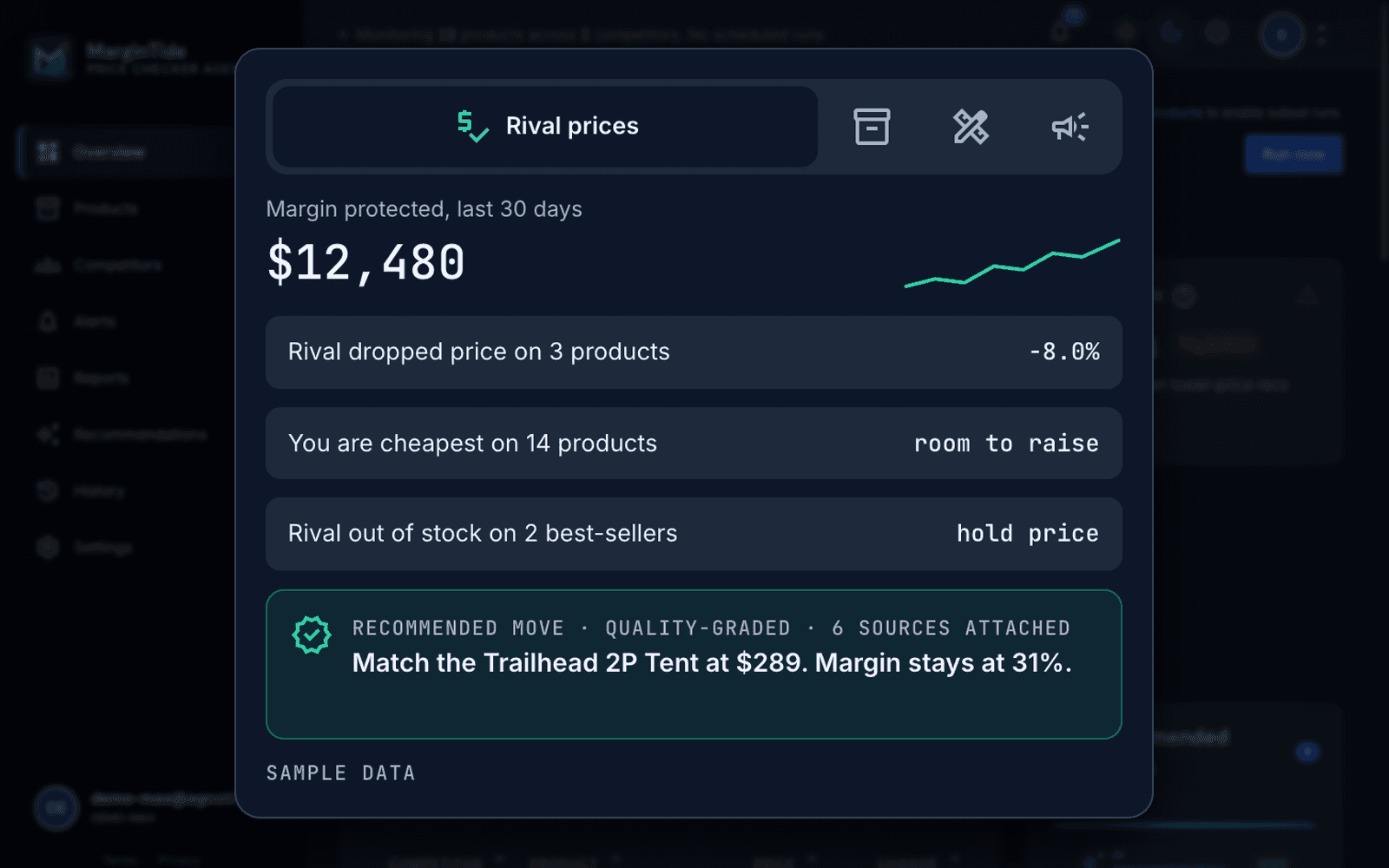
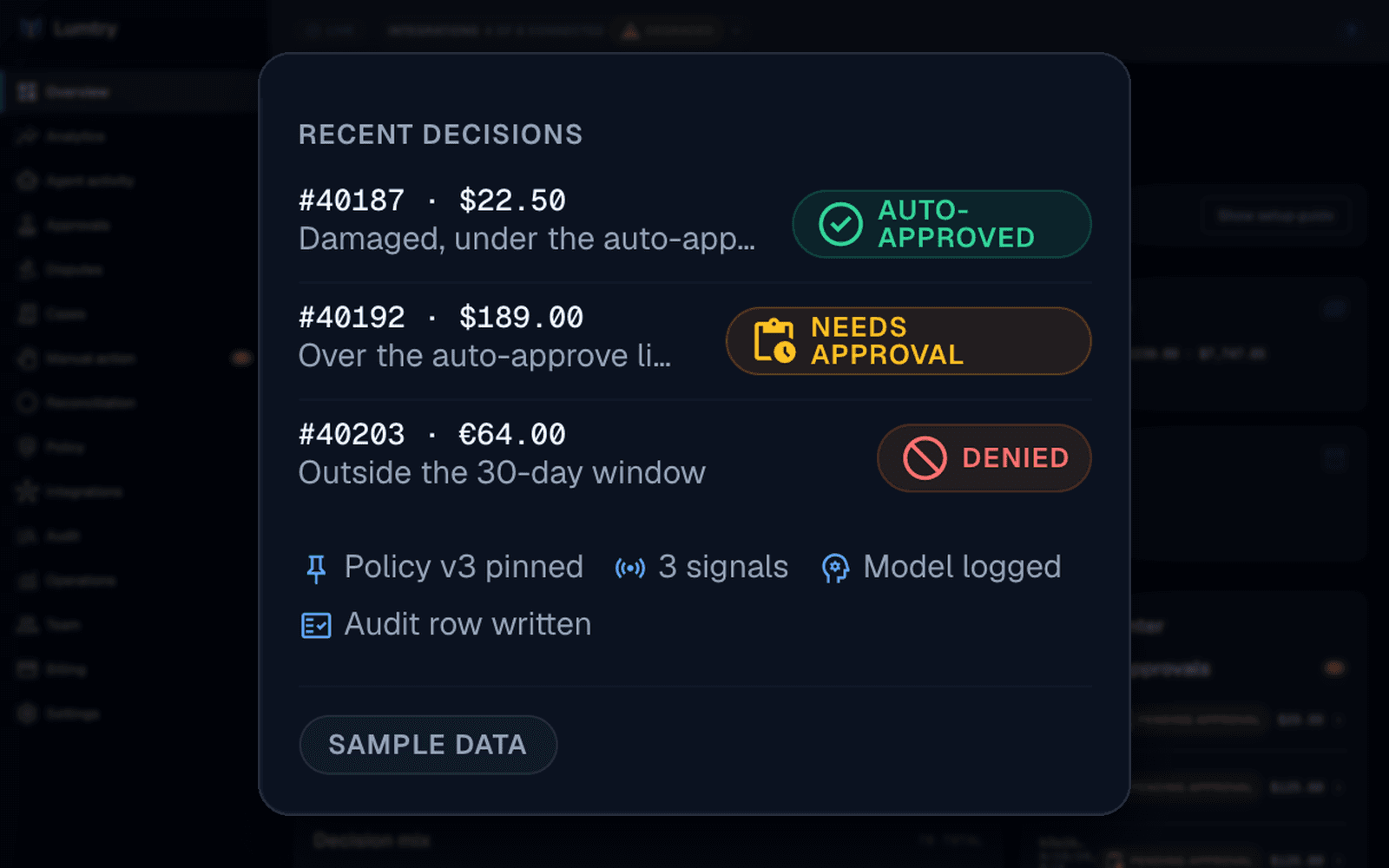
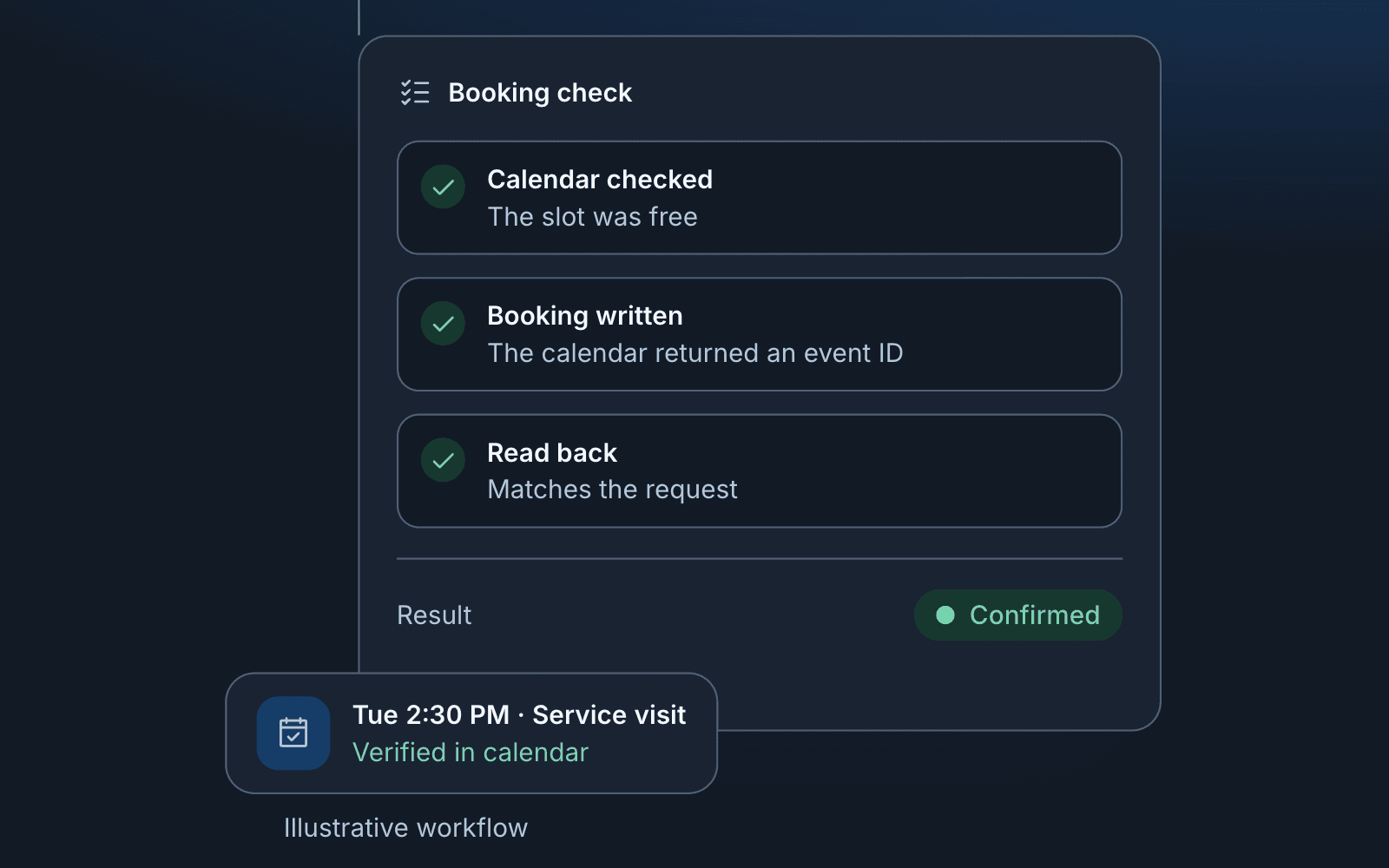
MarginTide protects what you charge. Lumtry protects what you give back. Both start free. Notaray, in development, protects what you book. All three are built on the rules we ship for clients: evidence you can open, and a person on every call that matters.

Know every price. Protect every margin.
Tracks rival prices, supplier costs, competitor plans and ad spend, then recommends a move you approve.
Starts free. Live demo, no account needed.

Refunds decided by policy. Exceptions decided by you.
Your refund policy decides every request, your team approves the edge cases, and every step is on the record.
Starts free. Live demo, no account needed.

Missed calls are lost jobs. Not for long.
An AI front door built to confirm a booking once the calendar shows it, and hand off anything uncertain.
In development: the booking engine is in testing now, and phone answering is on the way.
Model providers, data sources, ticketing, payments, version control, we route between them rather than rebuilding them.
“Our AI automation plugs into your stack to create a unified, intelligent workflow”
Founded by a team that built and ran ML platforms inside banks, marketplaces and Series-A startups. We've been on your side of the table.
Most agent projects fail in the same place, between the demo and the rollout. We started Agnotiq because we wanted a studio that took that handoff seriously. We build, we evaluate, and we stay on call for the quarter the system goes live.
The four ways teams usually get an AI agent, and what each one leaves you with.
| Question | Agnotiq | Traditional consultancy | No-code freelancer | Off-the-shelf AI SaaS |
|---|---|---|---|---|
| Who owns the result | You: code in your repo, runbook included | A recommendations deck; code is extra | Their account and their automations | The vendor; you rent access |
| How quality is proven | Eval suite written first, run in CI | Workshops and sign-off meetings | Manual spot checks | The vendor's benchmarks, not your data |
| Fit with your workflow | Built around how the work runs today | Proposes a new process | Limited to what the tool supports | You adapt to the product |
| Human control | Approvals, audit trail and a kill-switch | Out of scope | Depends on the builder | Varies by product |
| After launch | 90 days on call, then optional Operate | Handover at go-live | Best effort | Support tickets |
| How it's priced | Fixed Discovery, then a fixed build quote | Day rates | Hourly or per task | Per seat or per usage |
The questions buyers ask before the first call. Anything else, ask us directly.
We ship code, not slides. Every engagement ends with a working system in your repo, an eval suite your team owns, and a runbook for the next person to pick it up. We measure ourselves on uptime, not deliverables.
We're model-agnostic by design. We benchmark across frontier and open models for each workload, route between them at runtime, and rebenchmark every quarter. Your contract is with us, not with a single provider.
All work happens in your cloud or a sandbox we stand up under your security review. We sign your DPA, run on your SSO, and write our evals against synthetic equivalents of your data so we can iterate without exposing it.
Two weeks of discovery, two to four weeks to a working prototype, then a production rollout once the eval bar is met. After that, most clients keep us on a retainer for tune-ups and new agents.
Yes, most of our engagements are alongside an internal team. We bring the agent patterns, the eval rigor and the platform plumbing; your team brings the domain depth. We document the handoff from day one.
Yes. Two of our agents grew into products: MarginTide for competitive pricing intelligence and Lumtry for policy-based refund automation. Each starts free and has a live demo you can open without an account. A third product, Notaray, an AI front door for service businesses, is in development, with early access opening.
Then we don't ship it. The eval suite is the gate, not a vibe check. About one in five prototypes gets retired, that's the system working as designed.
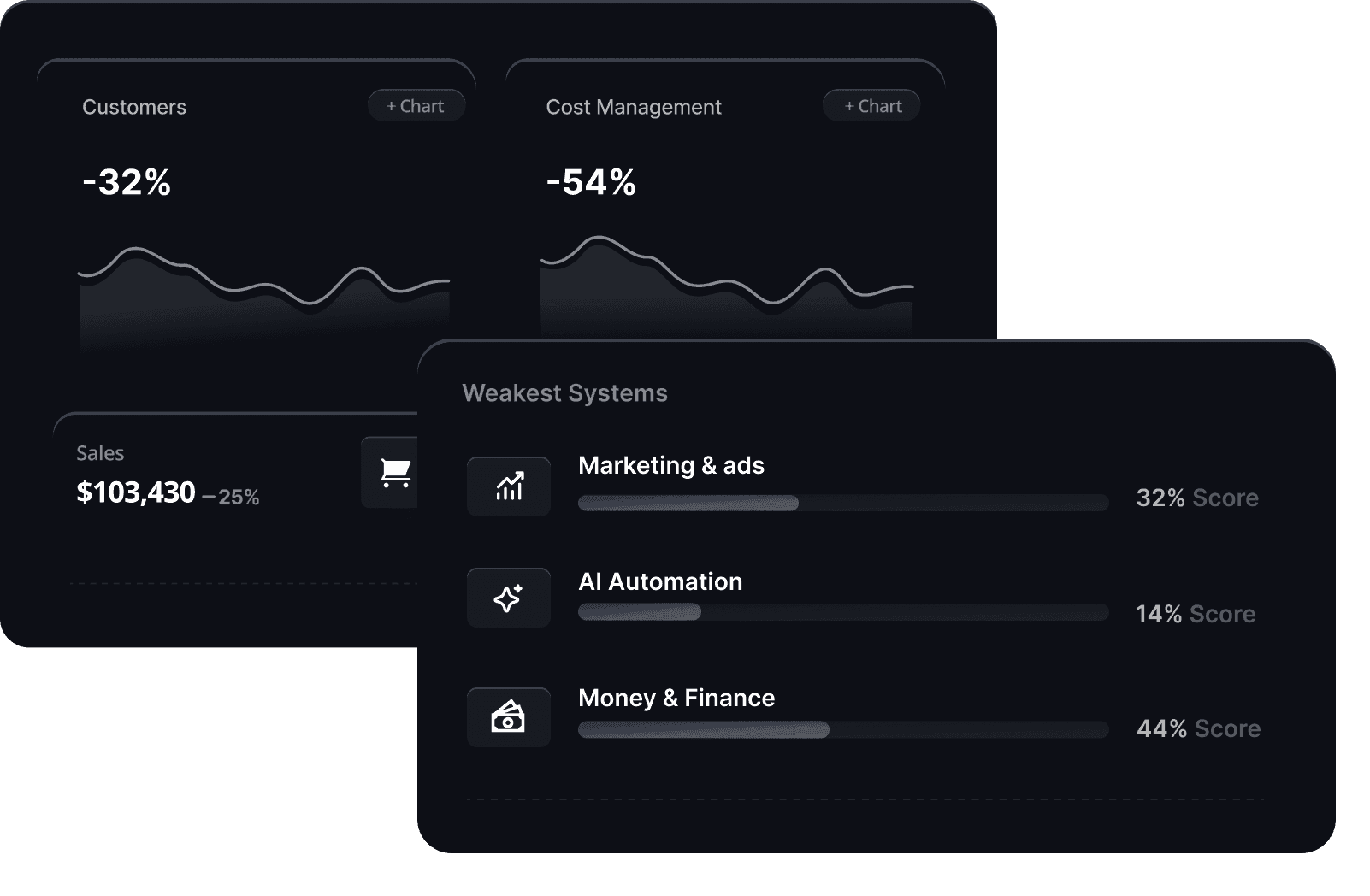
Eight questions, two minutes. A score, the weakest area to fix first, and an honest next step. No email needed.
Take the readiness scorecardWhat we learn shipping agents: evals, telemetry and the failures. Twice a month, no promotions.
A 30-minute fit call, then a two-week Discovery for $2,500 that ends in a fixed quote. Send a brief instead and we reply within one business day.